Memorial for Arnold Tubis (1932-2026)
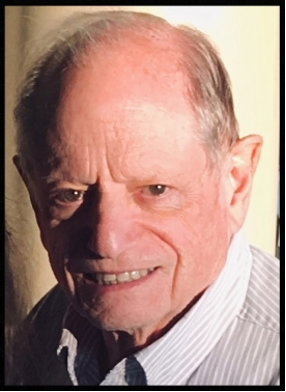
Prof. Arnold Tubis served Purdue University and the Department from 1960 to 2000. His research interests were first in theoretical nuclear and high energy physics, and then auditory biological physics, theoretical aeroacoustics, and musical acoustics. He was elected a Fellow of the American Physical Society in 1977 and a Fellow of the Acoustical Society of America in 1997.
Prof. Tubis earned his physics degrees at MIT — the B.S. in 1954 and the Ph.D. in 1959. His faculty career started as an assistant professor at Worcester Polytechnic Institute, from 1958 to 1960. He then moved to West Lafayette in 1960 with his wife Charlotte to accept a research associate position. Arnold was named Assistant Professor in 1962, promoted to Associate Professor in 1964, and promoted to Professor in 1969. He was Interim Head in 1988-1989, and Head from 1989-1997.
Prof. Tubis endowed the Charlotte Ida Litman Tubis Award in his wife’s memory to recognize and promote clear and concise communication of scientific ideas beyond the physics and astronomy community. The award is given annually by the Department of Physics and Astronomy to graduate students who demonstrate excellent scientific writing.
In retirement, Prof. Tubis lived in California, and most recently in Delaware. At both locations, he was an active scholar, musician, origami artist, and origami author. See his origami gallery at https://www.tubisorigami.com
In Memory of Arnold Tubis (1932-2026)
Obituary written by Arnold’s Granddaughter, Stephanie Brown
Arnold Tubis, Emeritus Professor of Physics at Purdue University, passed away peacefully on June 7th, 2026. He was 94. Arnold was an accomplished musician, a world-class origami designer, an innovator in math education, and an active member of the Jewish community. Despite his quiet demeanor, he was known for his collaborative spirit, enriching every community he joined from Purdue University to the Greater San Diego Origami Group. While his accomplishments are many, he will be most remembered for his curious mind, patience, generosity, and encouraging mentorship.
Born March 28,1932 in Pottstown, Pennsylvania, Arnold was raised with his older sister Sophia by their loving parents Rose and Joseph, immigrants from what is now Ukraine. He traced his life-long love of both music and acoustics to the piano lessons he began taking in second grade. It was then that he realized he had an ear for pitch and a curiosity about the science of sound. As a teenager, his family relocated to Atlantic City where he enrolled in the rigorous math and science high school program that set him up for his future academic career. He served as president of the Science and Latin Clubs his senior year before making his way to MIT to study physics. Unsurprisingly, he listed in his senior yearbook that his number one pet peeve was “people who aren’t willing to learn.”
Arnold continued to excel academically at MIT where he interacted with the world’s preeminent scientists. His granddaughters had fun quizzing him about every historical figure depicted in the 2023 film Oppenheimer that he knew or met. He stayed at MIT for his doctoral work in physics where he continued his research on electronic wave functions. During the final year of his Ph.D., he was appointed Assistant Professor of Physics at Worcester Polytechnic Institute.
During his years at MIT, Arnold attended Jewish Hillel Foundation events for students in
Cambridge and Boston. It was at one of these events that he met his wife Charlotte, who was pursuing a degree in biology at Boston University. In June of 1959, Arnold and Charlotte finished their degrees and were married a few days later.
In 1960, the newlyweds moved to West Lafayette, Indiana where Arnold joined the Physics
department at Purdue University as a research associate. Over the next few years, Arnold and Charlotte were delighted to welcome their children Cheryl and Eliot into their family. During their time in Indiana, Arnold and Charlotte were also active members in the Sons of Abraham Synagogue, where Arnold took over as the congregation’s president in 1976, the Greater Lafayette Religious School, the Purdue Hillel, and the Greater Lafayette Holocaust Remembrance Committee.
At Purdue, Arnold quickly moved through the ranks of Assistant Professor and Associate
Professor, becoming a Full professor in 1969 and eventually Department Head in 1988. During his illustrious tenure in the department, he taught undergraduate and graduate physics courses and collaborated with colleagues to create new research initiatives like the Center for Accelerator Mass Spectroscopy, educational innovations in computer and classroom technology, and science outreach efforts like Physics Funfest, Physics on the Road, and Sciencescape, a summer science camp for middle school girls. In addition to his research in atomic physics, nuclear physics, high-energy particle physics, and acoustics, Arnold was also passionate about educational research in mathematics, which he would eventually combine with his love of origami.
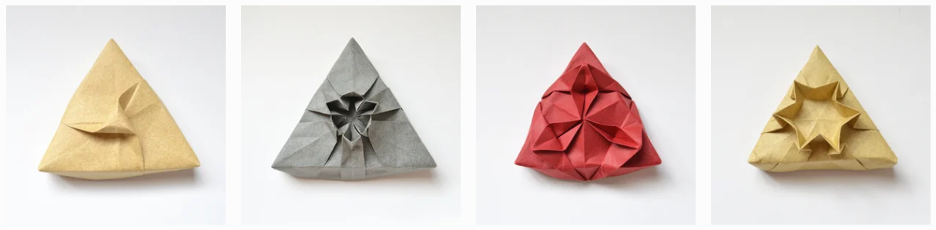
Arnold’s interest in origami was sparked early in his career at Purdue during a research collaboration with a colleague from Japan. One night when his colleague and his family were over for dinner, his colleague’s wife showed off her origami skills. Arnold recalled that he was “immediately hooked.” He started collecting origami books and learning everything he could about the practice, before long sharing designs and collaborating with other origami enthusiasts across the globe. He went on to exhibit models across the U.S. and internationally. He also authored or co-authored nine books and fifty articles on origami in print and online.
In 2000, Arnold retired as a Professor Emeritus from Purdue and he and Charlotte moved west to Carlsbad, California where they joined the Solel Reform Temple. Arnold continued to combine his interests in science and art as a docent at the Museum of Making Music, where he gave presentations of unusual instruments. He also continued his physiological acoustic research with local colleagues and joined the Greater San Diego Origami Group, eventually becoming the organization's coordinator. In his work with the Origami Group, he displayed his designs in museum exhibitions, attended conferences, and led workshops. While he’s well-known for his money folds, fabric boxes, and broach designs, he was most proud of his collaborations designing curricula that drew on the principles of origami folds to teach middle school math. In 2005, he co-authored Unfolding Mathematics with Origami Boxes with Crystal Mills, a textbook that combines principles of algebra and geometry with paper-folding techniques. He is fondly remembered for his ability to create welcoming spaces for people to learn and hone their own origami craft both in person and online.
During the last four years of his life, Arnold became a beloved member of the Truitt Independent Living Community in Rehoboth Beach, Delaware where he often made and distributed origami broaches to the ladies and gave piano concerts in the lobby. He was also a member of the choir and book club and a highly in-demand trivia team member.
Arnold was predeceased (February 2015) by his wife of 55 years, Charlotte Tubis. In addition to generations of science, math, and origami students, he is survived by his children Cheryl Brown and Eliot Tubis, his grandchildren Stephanie Brown, Amanda Pinkham-Brown, Nicolas Tubis, and Justin Tubis, and his great-grandson Casey Pinkham-Brown.
In his memory, donations can be made to the following organizations:
- Origami USA https://origamiusa.org/donate
- The Elementary Institute of Science in Southeastern San Diego https://eisca.org/support-eis/
- The University of Delaware Hillel. https://secure.givelively.org/donate/hillel-the-foundation-for-jewish-campus-life-newark-de/building-the-jewish-future-matching-campaign
For more about Arnold:
- Learn more about Arnold’s Origami Work. https://www.tubisorigami.com/
- Learn more about Arnold’s Physics Career. https://www.physics.purdue.edu/people/faculty/atu.php
- Share your memories of Arnold. https://www.kudoboard.com/boards/zs7y023W
References:
- Origami images retrieved from tubisorigami.com on June 15, 2026
- NAMM Oral History Program, https://ww1.namm.org/library/oral-history/arnold-tubis