
Observations
of
Comet Hale-Bopp

Summary
The High Energy Astrophysics Group Members Dr. John Finley, and Rollin C.
Thomas observed comet Hale-Bopp on the night of March 27. Images were
acquired in the B, V, R, and I bands utilizing the SBIG ST-6 CCD camera at
the focus of the 16" Meade LX200 telescope at Cumberland Observatory. The
images were post processed utilizing the IRAF suite of image processing
tools. One of the goals of these observations was to image the "arcs" of
gas around the head of the comet which are visible in telescope views. Below
are some of the preliminary images.
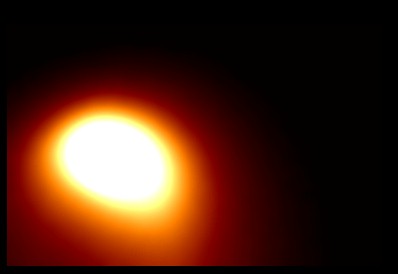
The image above is a 40 second V band (Visual) exposure of comet Hale-Bopp.
The raw image was bias corrected and smoothed with a 4 pixel gaussian
filter.
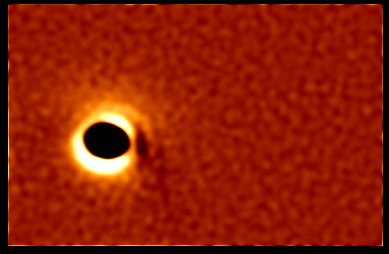
The image above is the V filter image after processing with a Laplace
filter. This technique is intended to reveal faint features which are
not visible in the raw image. Two of the arcs are now faintly visible around
the comet's head.
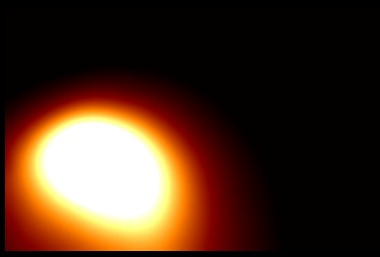
The image above is a 30 second R band (Red) exposure of comet Hale-Bopp.
The raw image was bias corrected and smoothed with a 4 pixel gaussian
filter.
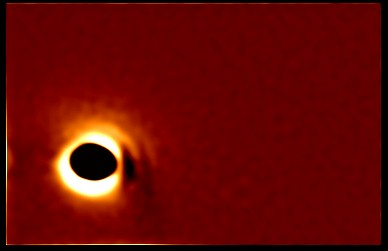
The image above is the R filter image after processing with a Laplace
filter. This technique is intended to reveal faint features which are
not visible in the raw image. Two of the arcs are now clearly visible around
the comet's head.
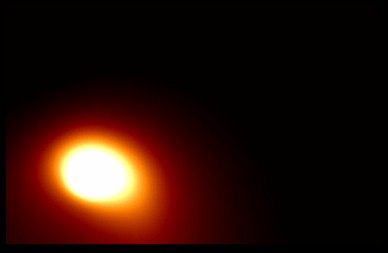
The image above is a 30 second I band (Infrared) exposure of comet Hale-Bopp.
The raw image was bias corrected and smoothed with a 4 pixel gaussian
filter.
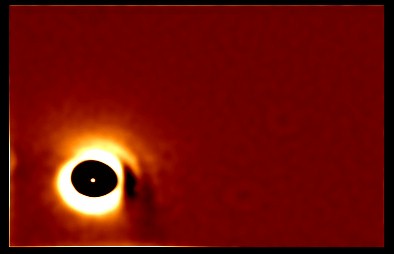
The image above is the I filter image after processing with a Laplace
filter. This technique is intended to reveal faint features which are
not visible in the raw image. Two of the arcs are now clearly visible around
the comet's head.
10 April 1997